In detail
Physiotherapy sessions kept in order from one link.
A course of physiotherapy is made of many sessions close together, and one missed session is enough to stretch everything out. Here is how a booking app helps a practice keep the pace, across physiotherapists, osteopaths and massage.
First visit, sessions and treatments
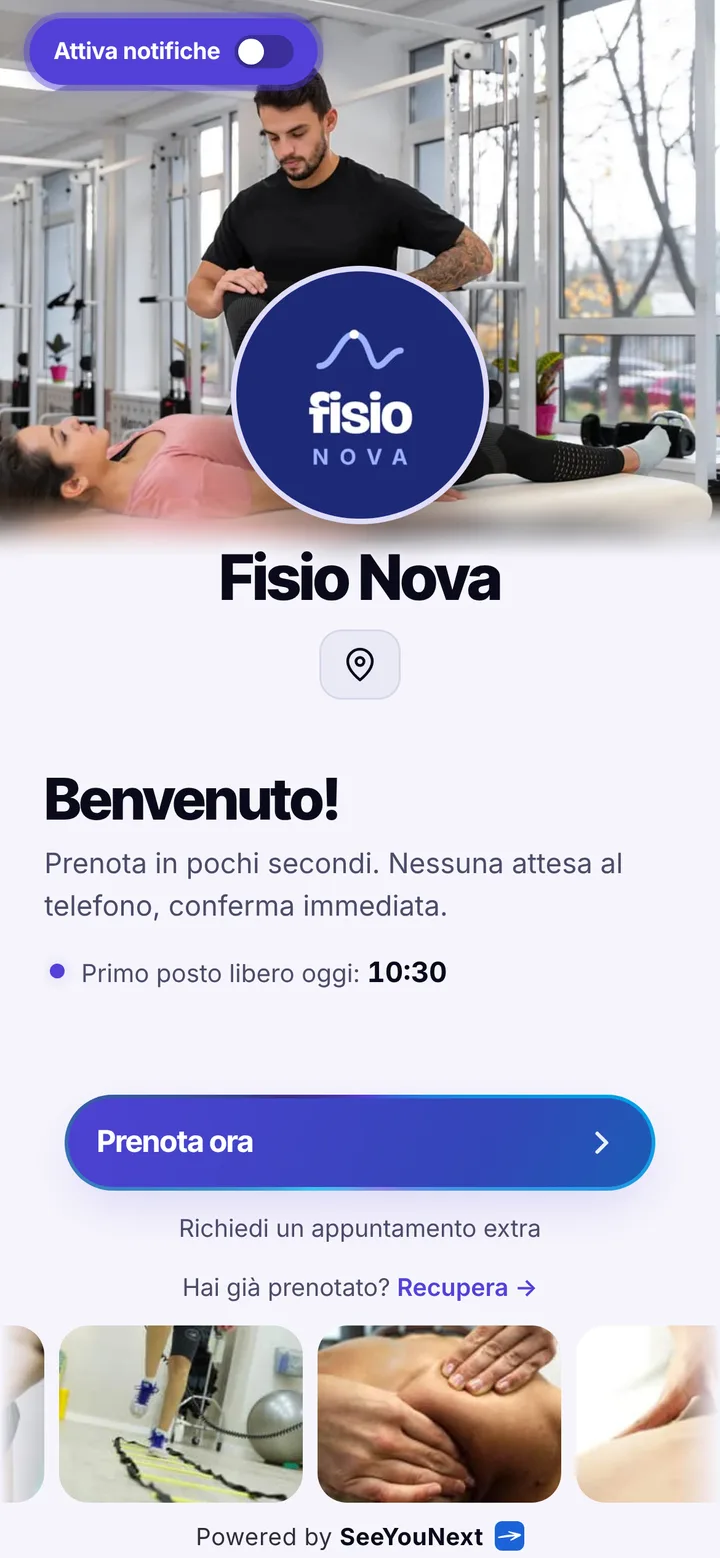
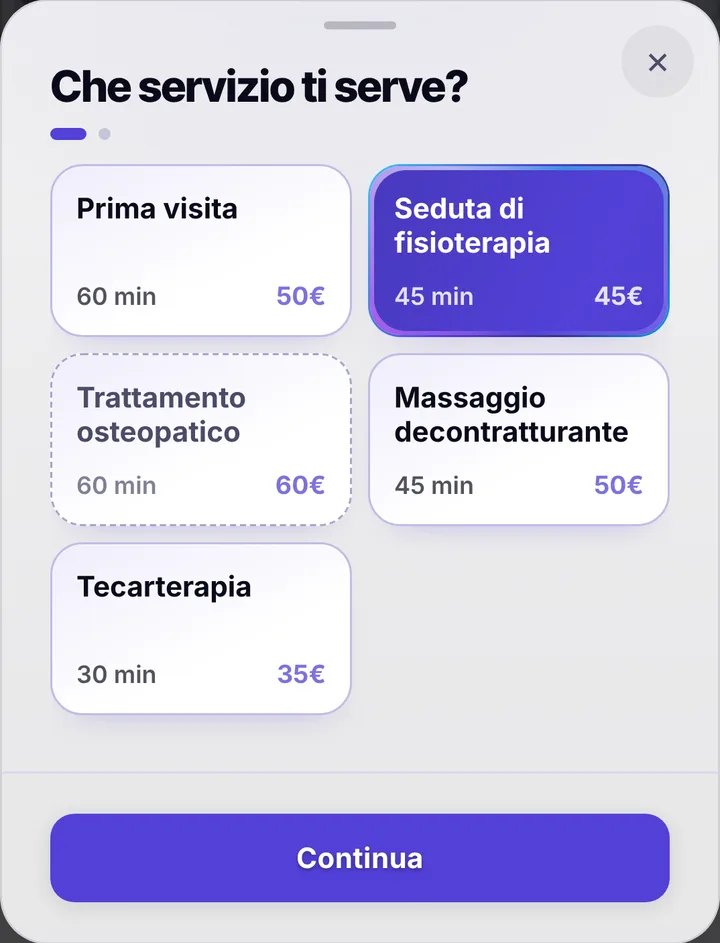
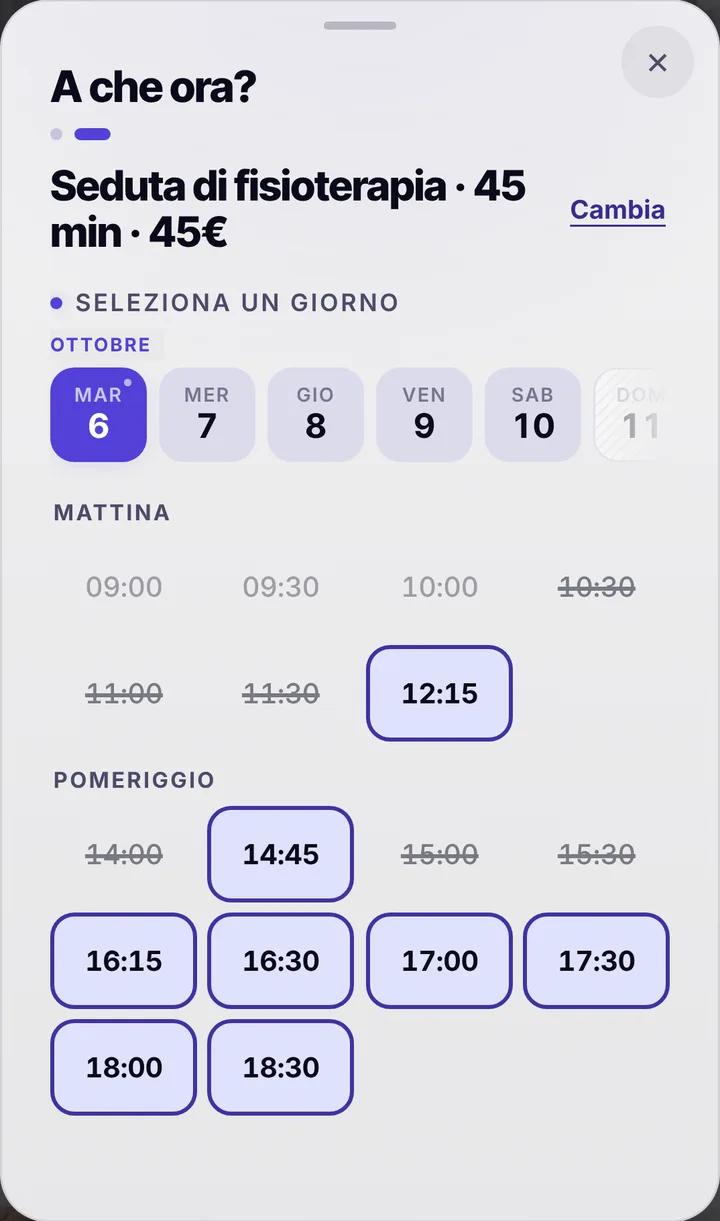
You write the list yourself, with the right length for each item: a one hour first visit, a forty-five minute physiotherapy session, an osteopathic treatment, Tecar therapy, a deep tissue massage. Patients choose from your link and only see the times when that item fits. If you prefer that only the first visit is booked from outside, say so in the notice at the top of your page, and schedule the following sessions yourself at the end of a treatment, looking at the diary together with the patient before they leave.
Physiotherapists and osteopaths under one roof
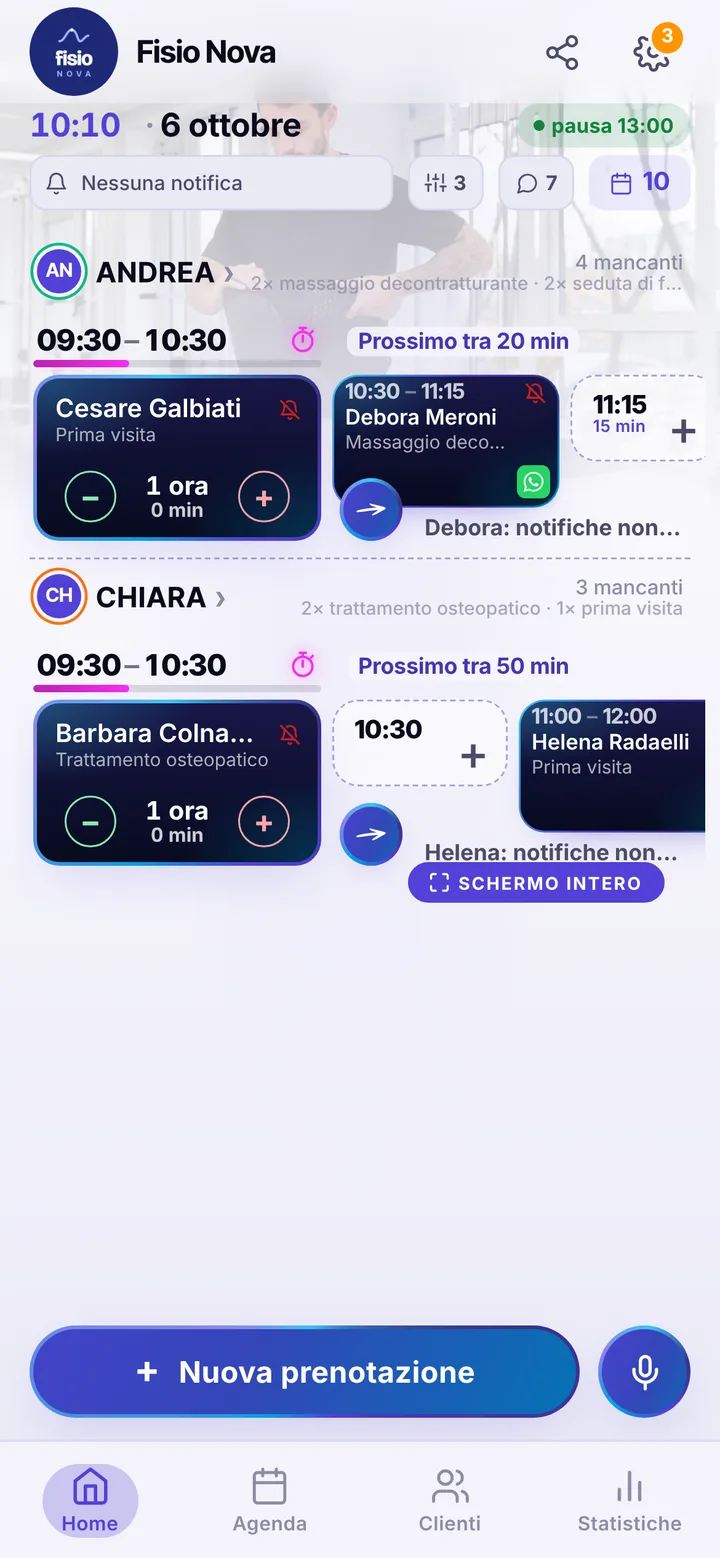
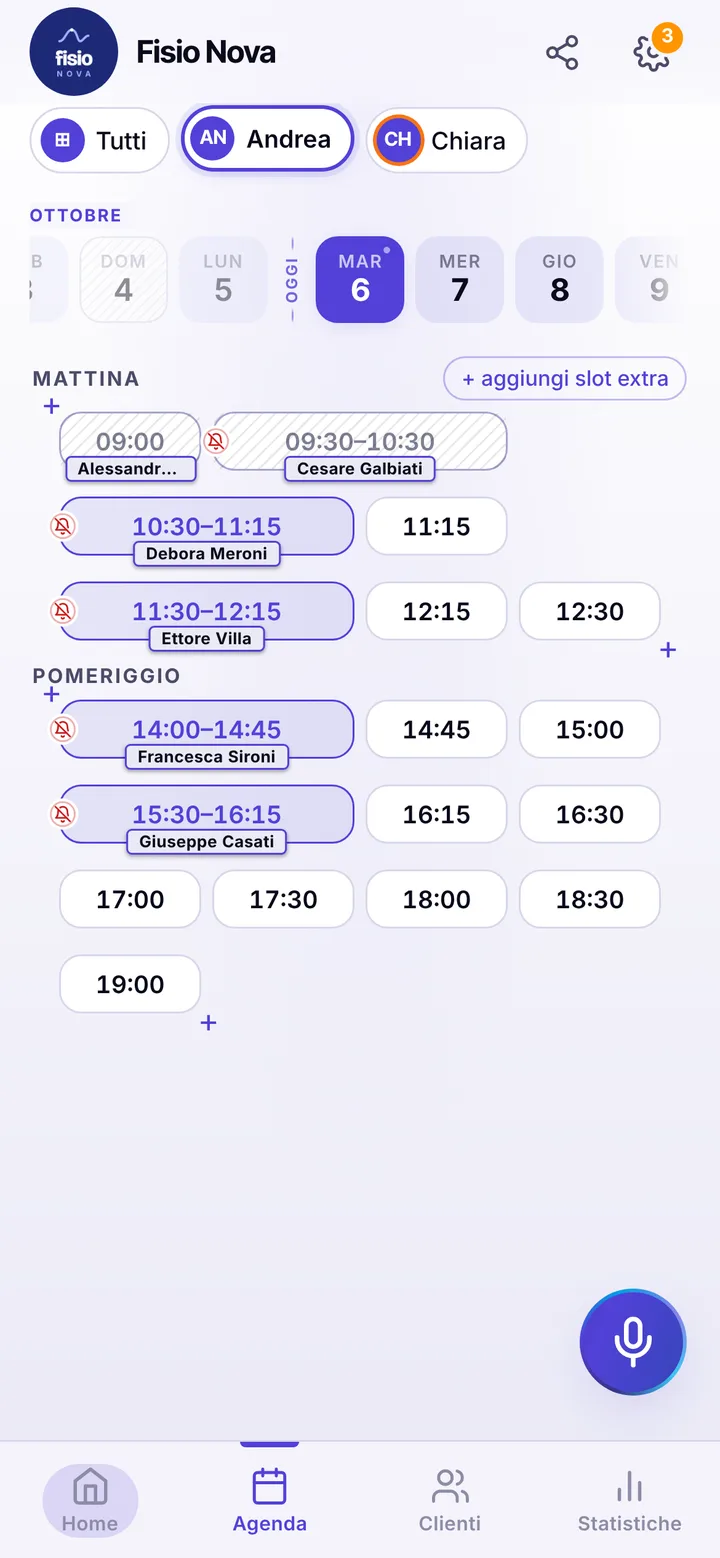
Each professional has their own diary, hours and treatments: whoever does not offer Tecar therapy never gets Tecar bookings. Patients choose who to see, or take the first free slot. When someone is on holiday you close their days and bookings only go to the others. Up to 12 people in one account, and everyone's day at a glance, on your phone or on the reception computer. When a treatment runs over, mark the delay and the next patient sees the new time before leaving home.
Keeping the rhythm of sessions
The sessions you book end up on the patient page, where they find them all and can ask to move one if something changes: the request comes to you and you accept it with one tap. Reminders arrive as notifications to patients who turned them on, by default the day before and two hours before; everyone else gets them on WhatsApp with one tap, from the practice number, with the message already written. When someone skips a session without warning, mark them as a no-show and from then on their bookings wait for your approval.
Health data: only what is needed
SeeYouNext manages appointments, not clinical records: no medical history, test results or assessment sheets, no invoices and no tax filing. To book, a patient only needs a name and a phone number, and notes are for practical details such as the times they can come. Reminders on a locked phone show the day, the time and the practice name, never the treatment. Data is stored on Google Firebase in line with the GDPR, and your patients’ numbers are never sold.