In detail
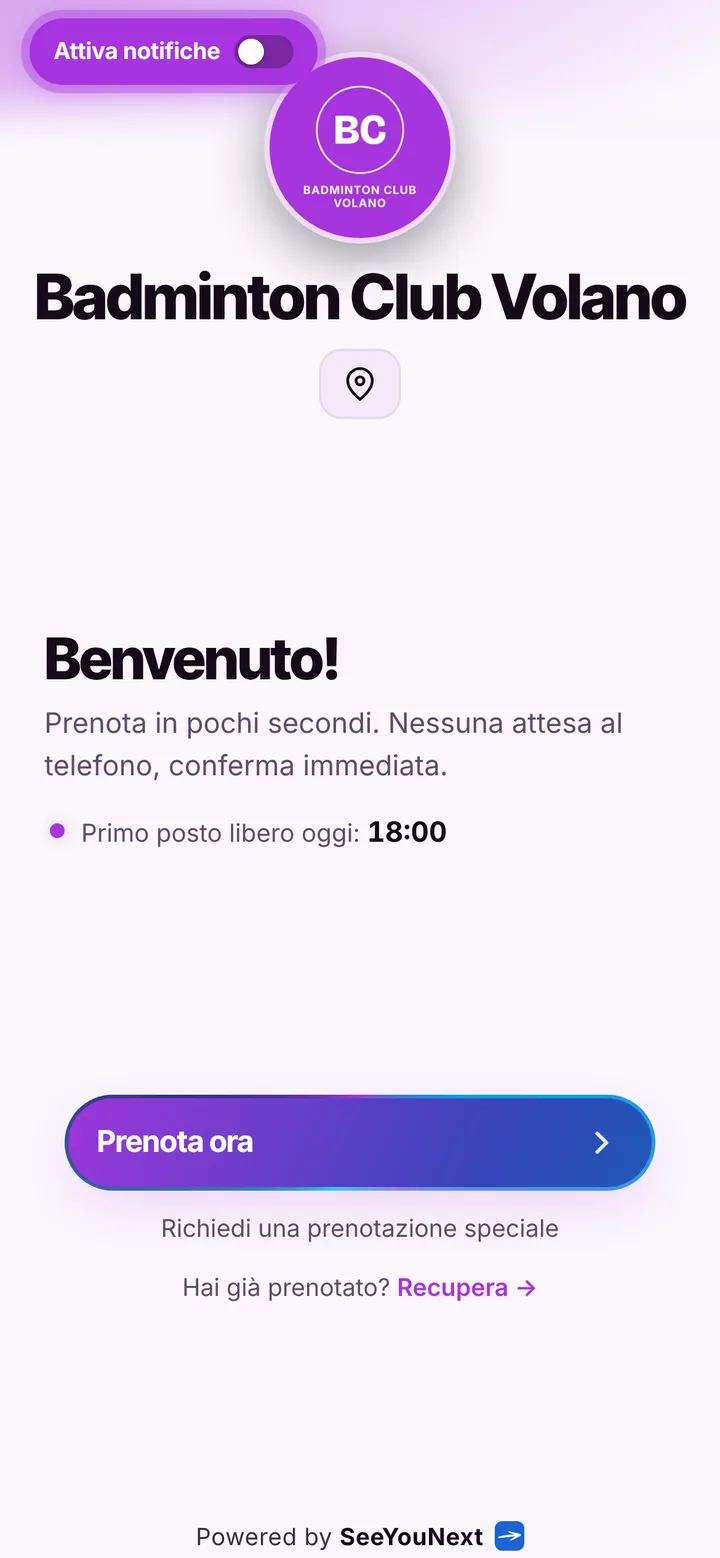
The badminton courts in your hall, organized from one link.
Badminton is played indoors, often in a sports hall where courts are marked side by side. Players turn up in small groups, in the evening or on weekends, and want to know which court is theirs. Your sports center’s link answers that for you.
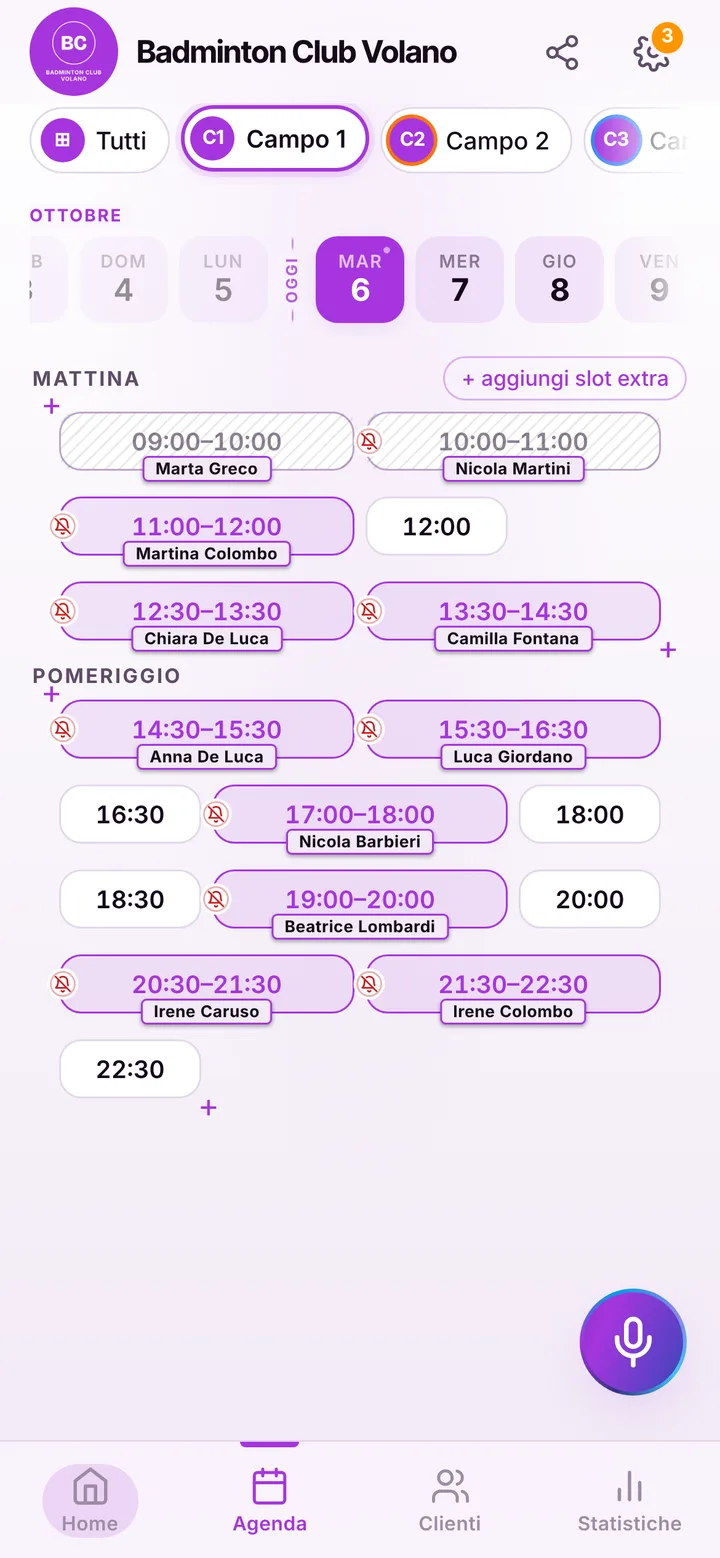
Several courts in one hall
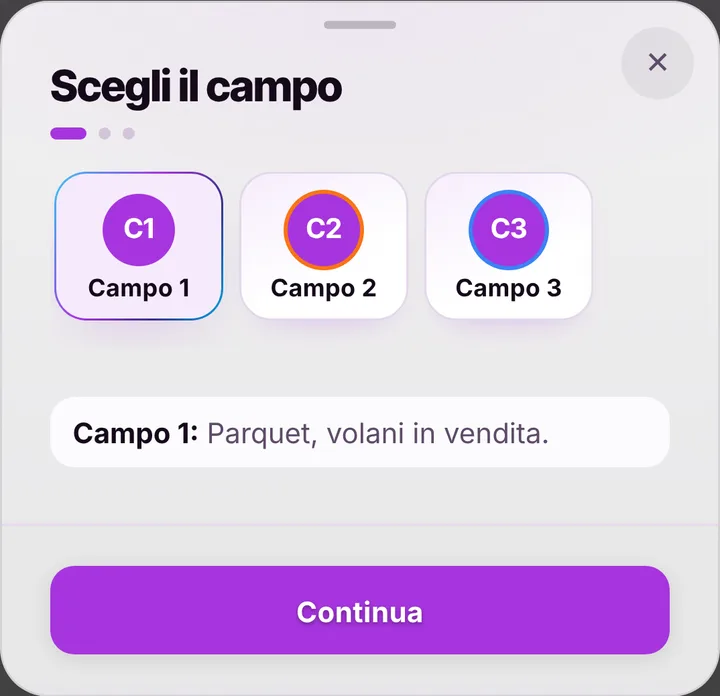
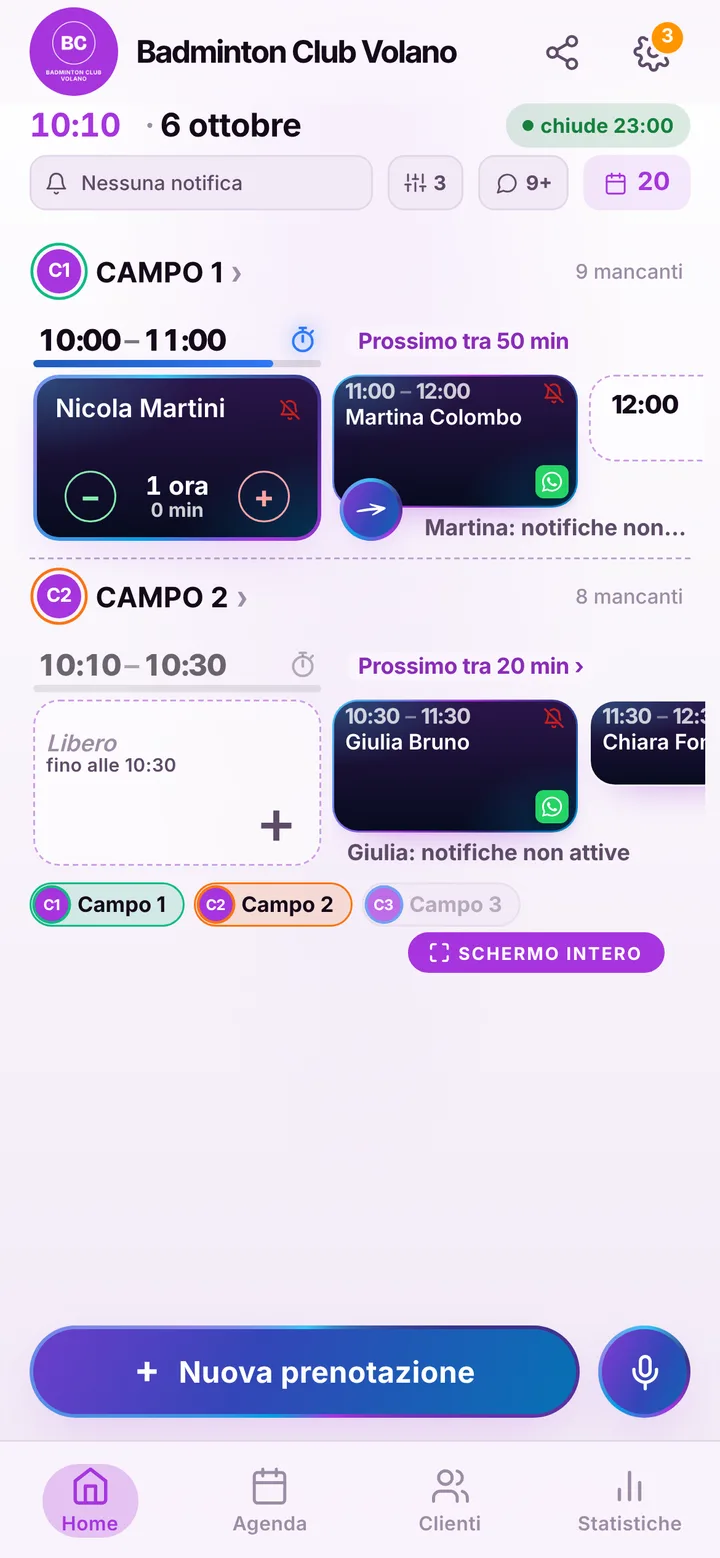
A hall can hold four, six, eight courts: each one becomes a card with a name and a photo, like “Court 3 by the stands,” so players know where to go the moment they walk in. Give each court its slot length, an hour or an hour and a half, and its price. You run up to 12 courts in the same account, and the calendar shows the whole hall, court by court, day by day. If a player has no preference, they take the first open time on any court.
Singles, doubles and mixed doubles
Badminton is played by two or four, and partners often change from week to week. Whoever books shares the link with the others: each one opens the page, sees court and time, and puts their name on the list of who’s playing. The booker says how many players are needed, and the page flags if anyone is missing; for doubles, the two teams can be set up there too. Phone numbers stay private. On the booking card you see who has answered.
A hall shared with other sports
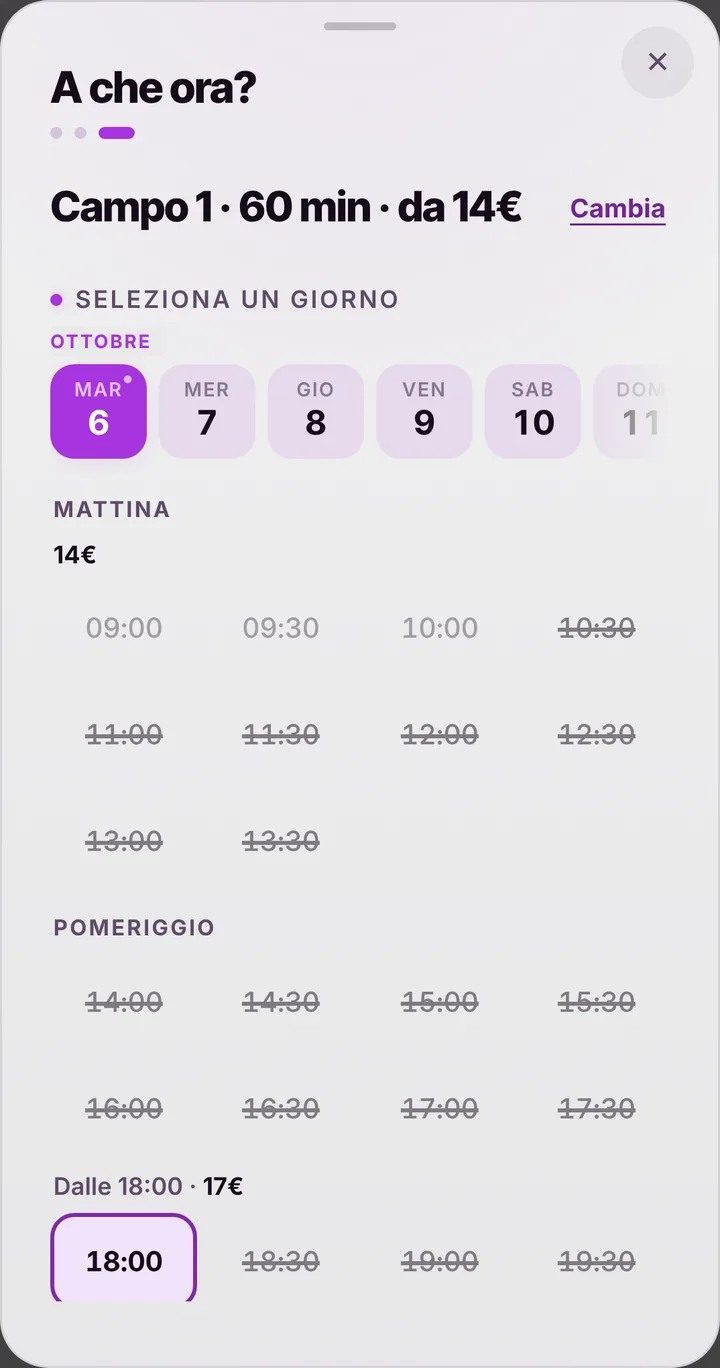
Sometimes the hall also hosts volleyball or team practice on certain nights. You close those hours in the calendar on the courts involved, and nobody can book them online; reopen them whenever you like. Vacations, holidays and days the center is closed you enter once. Evenings and Saturdays often carry a different price: on each court you set up to three bands by day and time, and players see the right amount before confirming, if you choose to show prices.
Last-minute openings
A pair that drops out the same evening leaves a court empty. You set the cancellation window, 24 hours by default, because a court freed up early can still find someone. Whoever is on the waiting list for that time and has notifications on gets the alert. Automatic reminders arrive as notifications the day before and two hours before, only for people who switched them on; everyone else gets a pre-written WhatsApp from the center’s number, sent with one tap.