In detail
A hearing center people can book from a link, even if they rarely use the phone.
People who come to a hearing center often struggle most on the phone, so setting a date by voice is hard work for both sides. In the first weeks with a new hearing aid, clients also come back several times for adjustments. Here is how a booking app makes checks, tweaks and the getting-used-to-it period simpler.
Booking without having to hear the phone
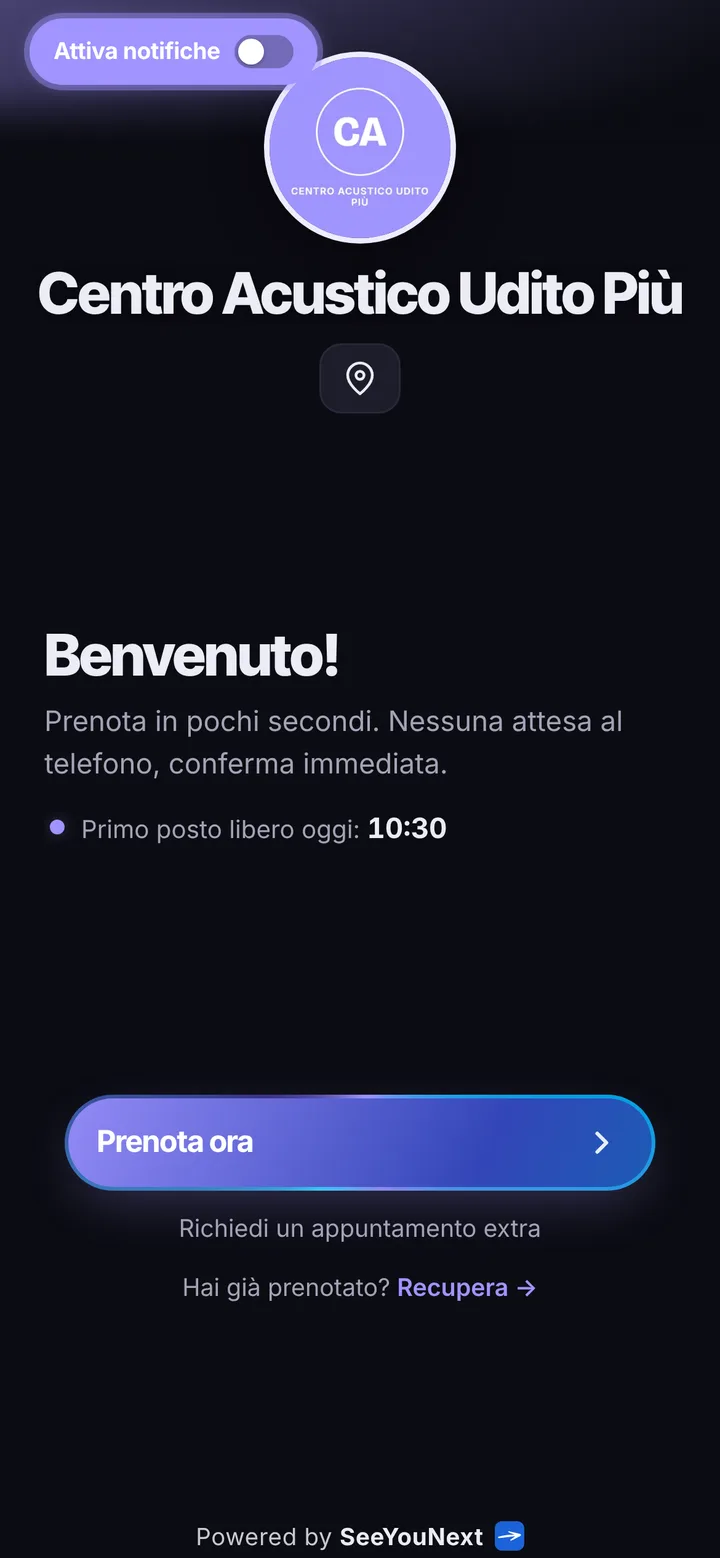
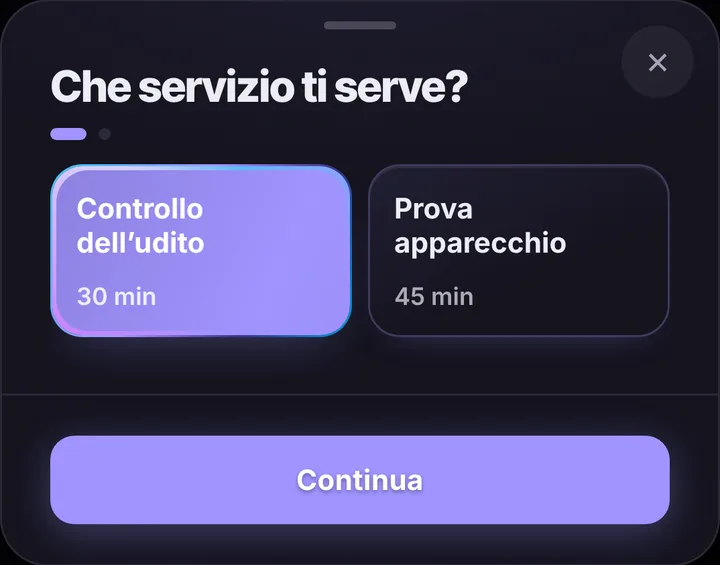
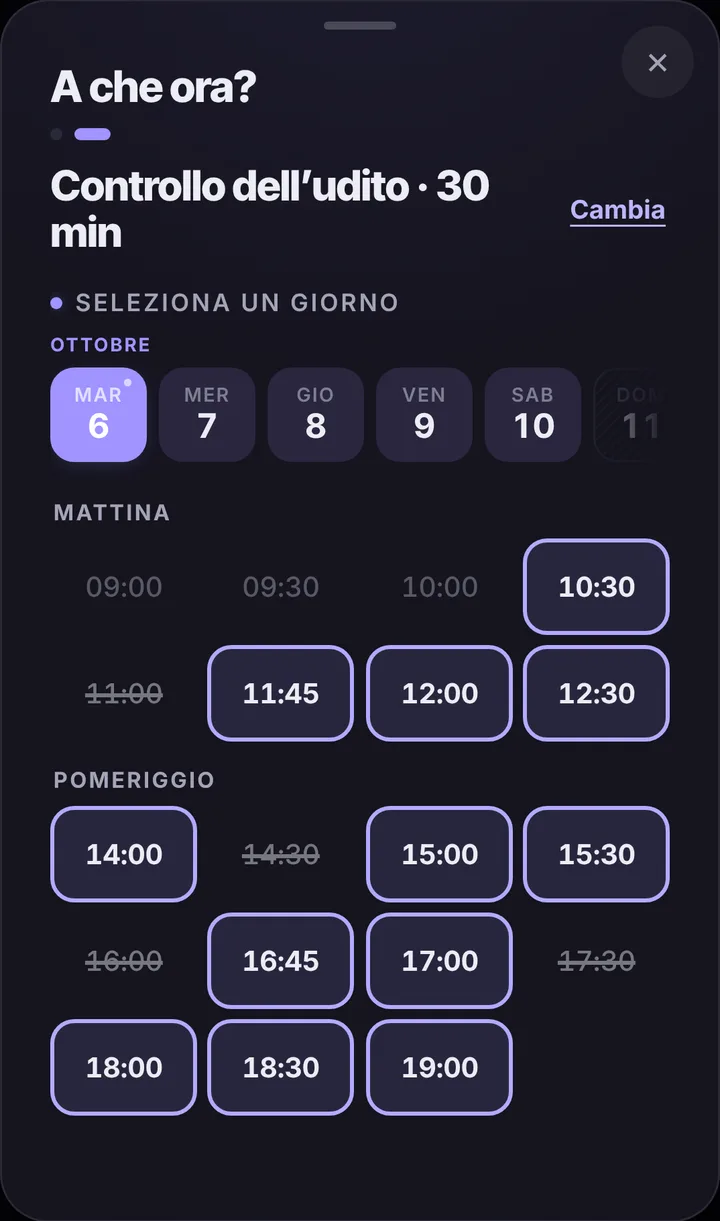
For someone with hearing loss, a call with hold music and street noise is the worst part. With your link the client, or the son or daughter helping out, picks the item and the time on screen, types a name and number and is done: nothing to catch on the fly, nothing to ask twice. The list starts with two items, a thirty minute hearing check and a forty-five minute session to try the hearing aid, and you add adjustments, cleaning or filter changes. Print the QR code of your link and leave it on the counter, or slip it into the bag with the batteries.
The weeks of getting used to it
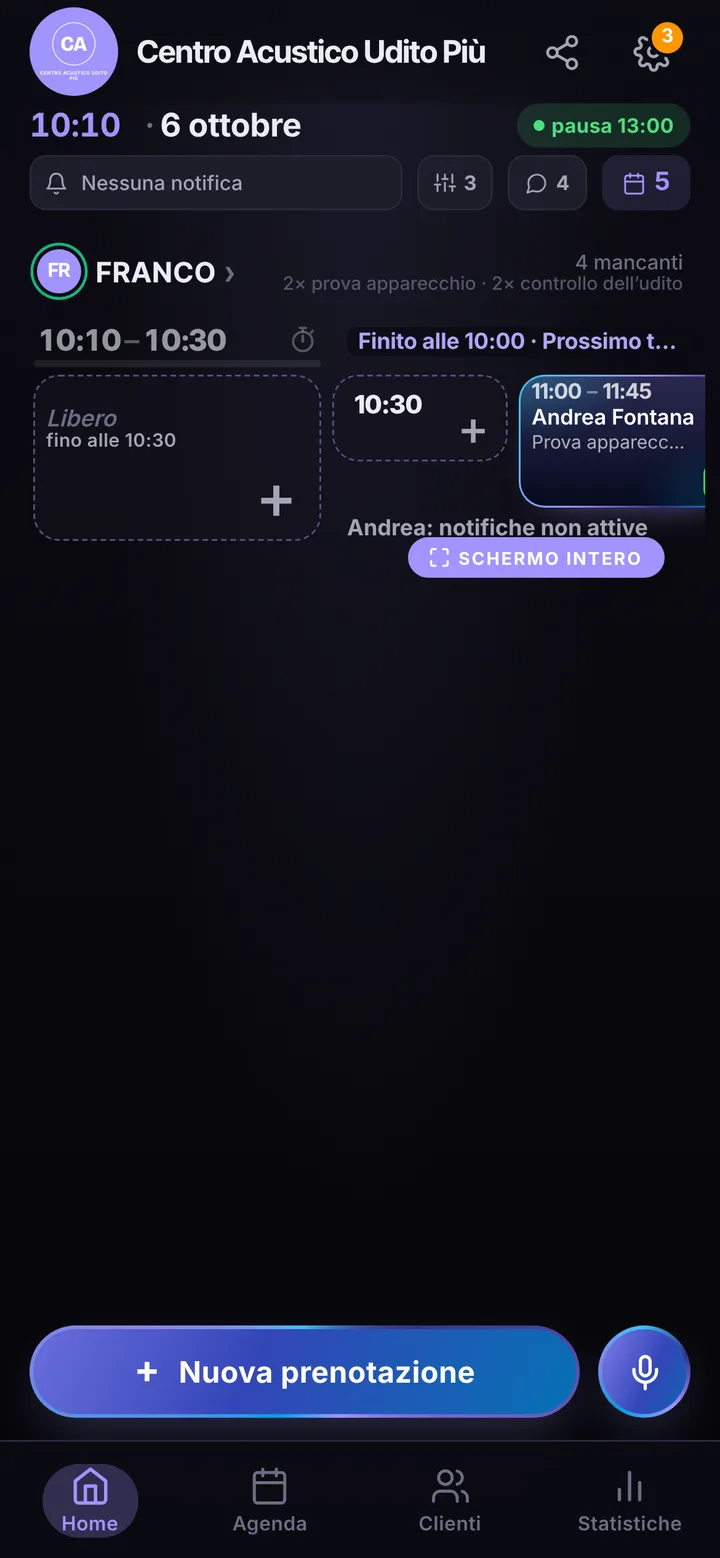
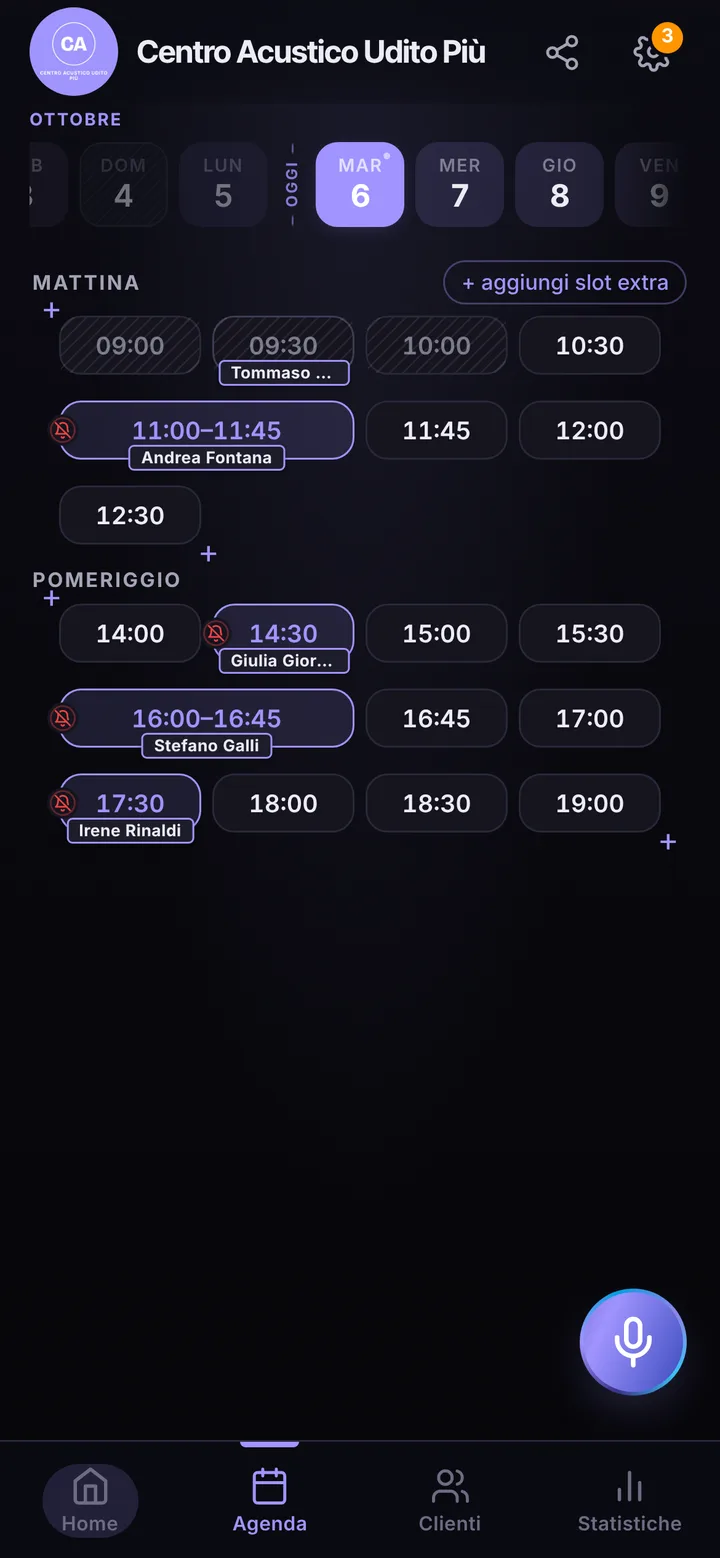
Early on with a new device, clients return to turn the volume up, swap a dome, figure out why it whistles. You book those visits yourself from the calendar, one after another, before they leave: online each person holds at most two active bookings, and you add the others. They find them all on their page. If a day stops working for them, they ask to move it by choosing a free time and you accept with one tap. Special needs, like coming on a Saturday when you are usually closed, reach you as a request for an extra appointment, and you decide.
Reminders for people who never read notifications
Clients who turned on notifications get an alert the day before and two hours before, with the day, the time and the center name, without the item they booked. Not everyone turns them on, though, so there are manual reminders too. From the booking tap WhatsApp or SMS and a ready text goes out from the center number; or tap call and the phone dials. A few spoken words sometimes do more than ten messages. Mark anyone who misses without a word as a no-show, and their next bookings wait for your go-ahead.
Several people, no hearing data
If two or three of you work at the center, each has a calendar and the items they handle, up to 12 people; and if one of you spends a day a week at another location, close that day and no bookings come in for it. When an adjustment runs long, send a delay notice with one tap and the next client reads the new time. SeeYouNext stores no audiograms, thresholds or device models: it is a calendar, not an audiology file. It issues no invoices and reports nothing to the Italian health system, so you stay on your usual software for that.